
Sub-Total: $0.00
Veggies to Grow Fast All Summer in Small Spaces
Cucumbers
Tomatoes
Peppers
Squash – Zucchini
Raven and Greyzini
Sorrels
Beans – French Filet
Greens
Berries
Dwarf Eggplant
DeCicco Broccoli
Dino Kale
Beans for drying
Lettuce
Eggplant
Amaranth
Malabar Spinach
Corn
Small Melons
Shallots – Onions
Hakurei Turnips
Beets – Bulls Blood
Cutting Celery
Minuet Napa Cabbage
Amazingly, you can grow more than one crop of vegetables and some fruit all summer long. In the South four crops per growing season – Zone 5 and 6 three crops and even in Zone 4 you can grow two crops. This is one of the best things yet to help you with the expense of fresh veggies these days, and to know you are getting very fresh, healthy produce that is higher in nutrition. And BEST OF ALL, these crops are ready for picking in only about 50 days.
They are smaller so you can grow them in pots, or small plots of land. There is nothing more satisfying than going out and picking your supper. No more throwing away soggy veggies that go bad so quickly.
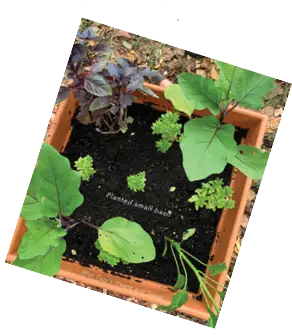
As you can see, this large pot has different veggies and some herbs which makes it perfect because the small Basil will help keep away pests, and attract beneficial insects when it blooms. Since spring came last for so many this year this is the perfect way to think of gardening. It is not true that you cannot plant gardens after mid June – you can grow them all summer long. You may need to adjust watering but other than that things will grow fine.
You can plant from April through August for most of these plants and for brassicas (cabbage and more) you can grow even later. It is a wonderful choice to rethink gardening to supply your family with the food you love.
First Aid For & By Plants
We think of herbs as healing our bodies, but they also heal one another and do a very good job of it. Recently it was reported that research on Chamomile proved that it will also heal plants and soil that are damaged or in danger. We tested it last year and, sure enough, it worked beautifully.
Many plants are stressed due to the changes in the climates, and this seemed to help those plants which were ailing. Another aid to plants is to plant Iris which will remove excess nitrogen from the soil as will Day Lilies. Sunflowers are a miracle plant that actually will remove toxins from the soil, some nuclear waste from the soils and are being used for that purpose in both Chernobyl and Fukushima right now.
The plants you plant in with your food crops that will also deter pests and protect your crops. Nasturtiums are a very good example in that they will give off a gas that will fool pests when planted with your beans and you will almost never see bites, or boring pests spoiling your bean pods. It really works and is beautiful with their fantastic blooms at the same time.
Cimicifuga, Artemesias, Onion and Garlic, Mint (in pots), Tulsi (Rama), Lemon Balm (in pots), Nasturtiums in your veggie gardens, are several plants that deter insects from visiting your gardens as well as deer and rabbits. Tulsi and Lemon Balm will also help deter mosquitoes.
Nursery or Hospital Garden
Weak plants, that seem to be suffering, should be moved so as not to affect its neighbors, or you may just see they only need to be so that they can be saved.
If they are in bad shape, and you think they are worth saving you can create a Hospital Garden for these plants. And I love to do this.
This little plot should have very, very, good soil (lots of compost and potting and garden soil mixed in, so it is loose and rich), and shade from at least 1:00 pm on to protect it from the hot afternoon sun is another way to bring them back – less stress, less mess. This can also be used as a starter bed for plants that are in just a plug form (root systems that are less than a year of age), cutting from friends you want to make sure are not invasive or diseased, or plants from places like Lowe’s clearance section, and to hold plant divisions until I can figure out what the heck I am going to do with them and until they are healthy. This is also a great learning experience for you. You will find it lots of fun too.
If you are also seeing problems with a plant – first – check leaves and stems for scars from disease, injury or bugs. If nothing is there, then dig the plant with a garden fork so you can avoid breaking too many roots, and lift it to inspect the root system. You can actually have several of the same plant all in one area and there will be one that is not thriving. Sometimes moving it to another area solves the problem – I think that even with plants there is that old “two is company – three is a crowd” thing going on.
U.S. Growing Hardiness Zones
The figures below offer a general guide to determining “Plant Hardiness Zones.” Think of the minimum winter temperatures in your area in a typical year. To see exactly where your Zone is, you can click on where you live on the USDA interactive map – which has been updated in 2012. Know that your area may not be exactly right due to the rise of temps.
https://planthardiness.ars.usda.gov/PHZMweb
The coldest temperature in your local region equals your Zone.
For instance – north Georgia used to be Zone 7 – but in 2011 the USDA changed it to Zone 8 (but not all maps reflect that to this day). In reality, the temperature has not dropped below 19° in over 4 years in this northern area of Georgia, due to the shifts in the climate, so by these numbers north Georgia is now Zone 9, which used to be the north Florida growing Zone – (so you can see how much of a shift there has been).
Contact your County Cooperative Extension agent for your usual “last frost dates.” But also use your own judgment from your own observations. Journaling and keeping track of things that you see is a wonderful way of learning for yourself.
Hardiness Zone Chart
- -49°F (-45°C) — Zone 1
- -49 to -40°F (-45 to -40°C) — Zone 2
- -40 to -31°F (-40 to -35°C) — Zone 3
- -31 to -20°F (-35 to -29°C) — Zone 4
- -20 to -9°F (-29 to -23°C) — Zone 5
- -9 to -1°F (-23 to -18°C) — Zone 6
- -1 to 10°F (-18 to -12°C) — Zone 7
- 10 to 19°F (-12 to -7°C) — Zone 8
- 19 to 30°F (-7 to -1°C) — Zone 9
But you can also create what are known as Micro Climates which increases or decreases your Zones. Growing on the south side of your house in Zone 4, can actually become a Zone 5 or 6 too, and vice-versa allowing you to grow other things. This gives you so many more choices.
I put a portable greenhouse on my back patio which is surrounded by three walls making it very protected. I was able to grow veggies in pots all winter long and also kept my lemon trees going with no problems at all when it reached 17 degrees, but it stayed at about 38 degrees in the greenhouse even at night because the concrete pad was heated all during the day.
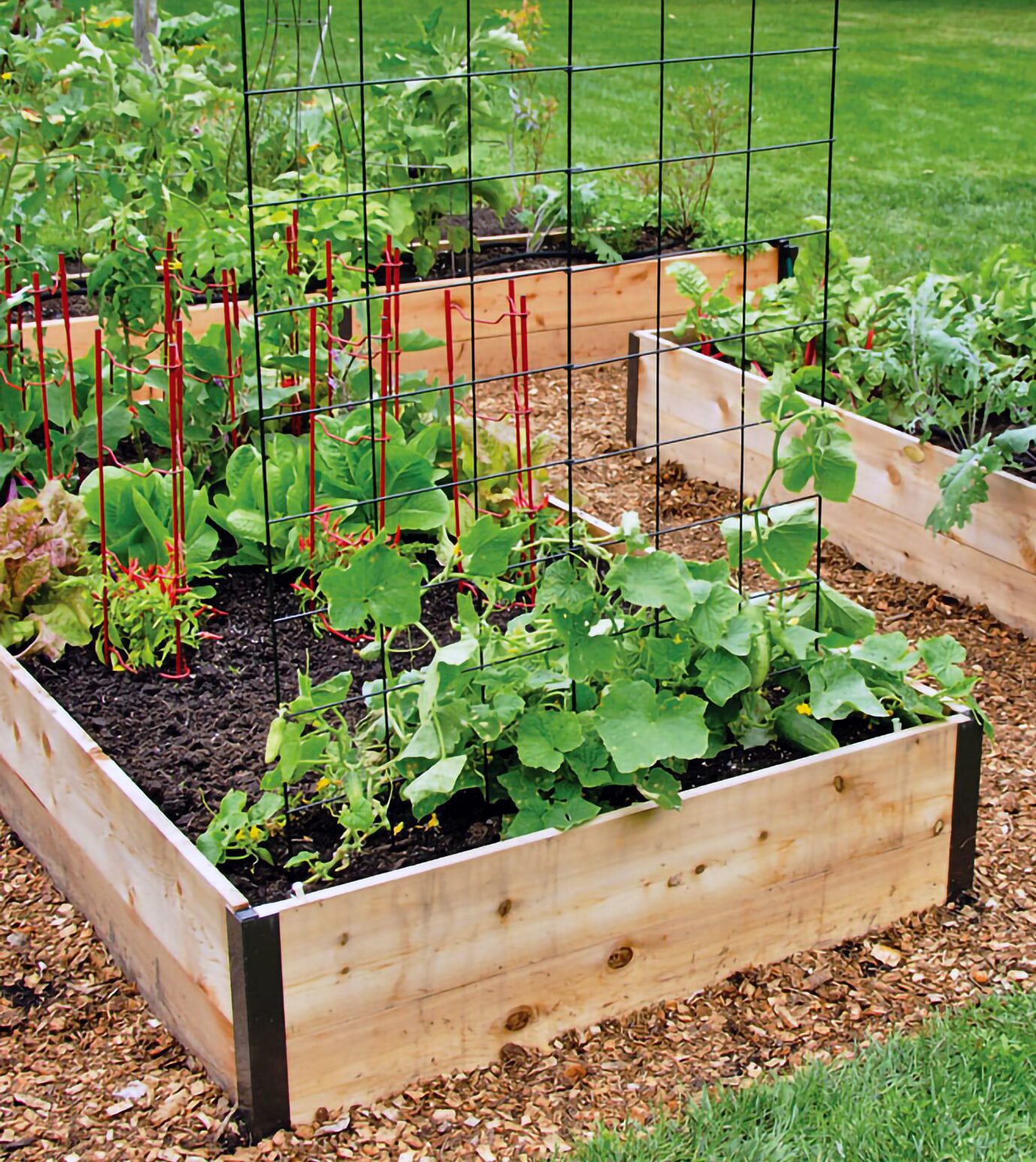
Raised Beds, Yes or No?
Yes, and no. For a person who is of a certain age or experiencing restricted movements, these beds can be a real plus. However, just using them for a decorative value or because they are “trendy,” is rather wasteful, and I know you are going to yell at me but as the ecosystem goes, it is wasteful.
If you put a barrier at the outside soil level, it prevents root growth, and does not allow the plants to live as they should. With these features, you will have to water almost every other day in dry seasons, you will have to fertilize much more frequently and you will have to replace part of the soil each year because the nutrients have been depleted.
If you look at the original gardens of Thomas Jefferson’s famous gardens which he also used for research in order to improve the food supply in the Colonies, and to profit from export to other nations and Colonies. In some of his early sketches the beds were outlined with boards, of some sort, and that was probably for ease and maintenance. Some had seen some of those early sketches and felt that they were raised beds, but if you read his writings, they were not as he was very conscious of the ecosystem of the day, and water was a precious commodity for sure.
Sometimes it is forgotten that the crops grown in each area must be rotated, as they also should be in any garden setting. So if you are thinking of using raised beds, do some really good research and realize that drought is a thing that is frequent these days, and it is a lot hotter than it has ever been before in all of history.
I don’t even mound hills for squash, pumpkins, or anything any longer. All because moisture is so precious and we cannot waste a drop. So even planting squash, pumpkins, and melons flat is important and moisture will not then wick out of the mounds. I know it sounds silly but it really will become drier even with a small mound, so imagine the drying effect of a raised bed.
Mizz Tizzy’s Weeds and Seeds
www.mizztizzysweedsandseeds.com
Free Catalog · Cookbook · Gardening Journal
Etsy.com:
www.etsy.com/shop/MizzTizzysWeedsSeeds